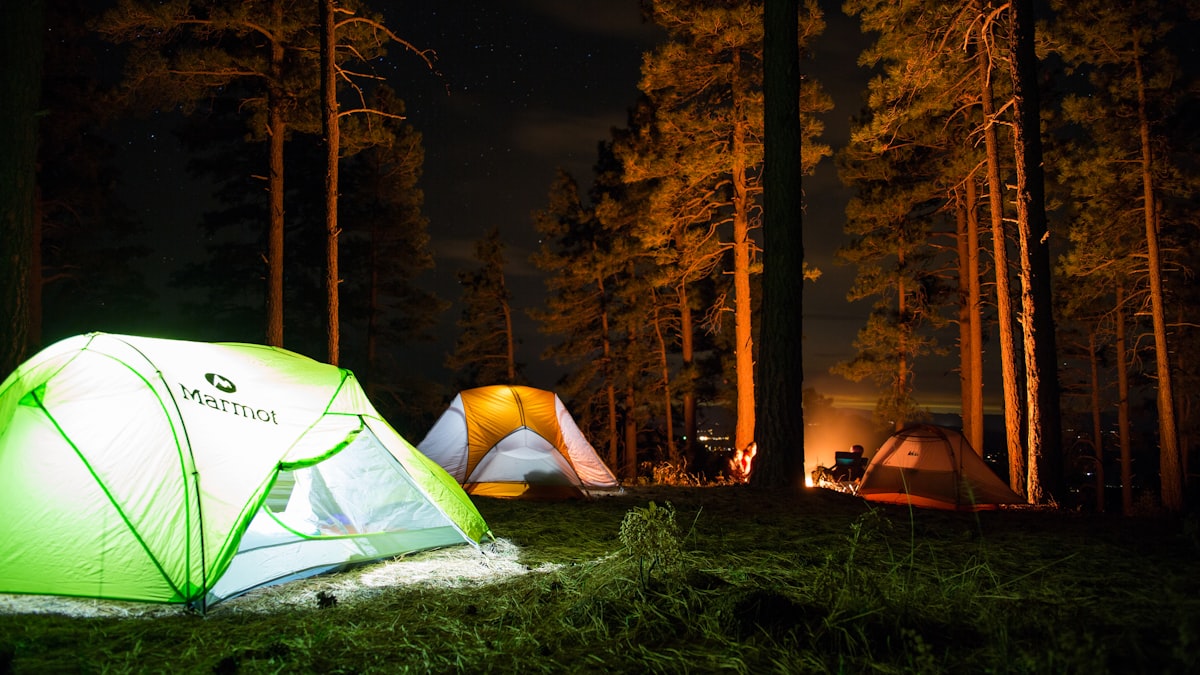
Best Family Camping Tents of 2026: Every Size Compared
This is our master guide to family camping tents. Rather than one arbitrary list, we've organized by family size, camping style, and priority so you can jump to what actually applies to you. Every recommendation here is a top pick from our size-specific guides — click through for deeper analysis.
Skip to Your Situation
Coleman Skydome 6
The sensible default. Fast setup, weatherworthy, priced right.
See on AmazonCORE 9-Person Instant Cabin
126 sq ft with room divider, instant setup.
See on AmazonColeman Skydome XL 6
Premium fabric, full rainfly, buy-once construction.
See on AmazonWhat Family Size Do I Actually Need?
Here's the rule that saves 80% of family camping tent buyers from disappointment: subtract 2 from the marketed capacity. Manufacturers rate capacity by how many sleeping bags fit floor-to-floor with zero gear inside. In real family camping, you need floor space for duffels, a cooler, wet raincoats, and standing-up-to-change space.
| Your family | Buy this tent size | Why |
|---|---|---|
| Couple, no kids | 3–4 person | Space for gear inside, comfortable sleep |
| One parent + one kid | 4-person | Room for both plus modest gear |
| Family of 3 | 4-person or 6-person | 4-person if minimalist, 6-person if you want space |
| Family of 4 | 6-person | Almost always the right call |
| Family of 5–6 | 8-person or 10-person | Or a 9-person like the CORE |
| Family of 7+ | 10-person, 12-person, or two smaller tents | Two tents often better than one giant |
Best Family Tents by Style and Priority
Coleman Skydome 6-Person Tent

The tent that fits the largest number of American families without overthinking it.
Why it stands out 5-minute pitch, 20% more headroom than a classic dome, and a genuinely dry floor.
For a family of 3 or 4, this is the size and style that just works. 90 sq ft floor, 72" peak (most adults stand up), 5–10 minute setup, and the WeatherTec seam system holds up in real rain. See our full analysis in the 6-person tent guide.
Pros
- 5–10 minute setup
- True standing room for average adults
- Consistently $150–$200
- Proven in weather
Cons
- Cheap stakes need upgrading
- Small vestibule
- Not truly 6-adult capacity
Best for: Family of 3–4 who camps a handful of weekends per year.
CORE 9-Person Instant Cabin Tent

A 14 x 9 ft cabin tent that sets up in under 2 minutes and actually holds a family of 5–6 with gear.
Why it stands out Near-vertical walls, a 90-second pitch, and more room per dollar than almost anything.
For a family of 5+, standard "family tent" sizing quickly stops working. The CORE 9 gives you 126 sq ft of floor with near-vertical walls, a 78-inch peak, and a room divider so you can partition adults from kids. The instant pole system that made the CORE 6 famous scales up here without penalty.
Reviews follow the CORE pattern: enthusiastic on setup and space, occasional complaints about the floor seam under sustained rain. Seam sealing before first use is the standard advice.
Pros
- Instant setup even at this size
- 126 sq ft with room divider
- 78" peak height
- Great value for the space
Cons
- Seam-seal before first use for heavy rain
- Bulky when packed
- Partial rainfly only
- Cheap stakes
Best for: Family of 5–7 who wants max space at reasonable cost.
Skip it if: You camp in heavy weather or exposed conditions.
Coleman WeatherMaster 10-Person Tent

17 x 9 ft main room plus 6 x 9 ft screened porch, 6'8" peak — a small apartment for family camping.
Why it stands out The rare big tent built to survive the storm that flattens bargain giants - hinged door, standing room.
For families where multiple people are over 6 feet, this tent solves the "can't stand up" problem permanently. Screen porch doubles as a bug-free hangout space. Sets up in about 20 minutes with two people.
Pros
- 80" peak — tallest in class
- 6x9 ft screened porch
- Two-room capable
- Cabin walls
Cons
- Genuinely large packed size
- 20-minute setup
- Around 35 lbs
- Screen porch not fully waterproof
Best for: Tall families, buggy environments, tent-based day lounging.
Coleman Skydome XL 6-Person Tent
Two rooms, two doors, and standing headroom — the roomy pick for families.
Why it stands out Two rooms via a divider, a door at each end, and near-vertical walls you can stand against.
The Skydome XL splits its interior with a room divider and adds a second door, so kids and parents can have separate spaces. Nearly vertical walls give 20% more headroom than a traditional dome, it fits three queen airbeds, and the WeatherTec floor keeps rain out. Sets up in about 5 minutes with pre-attached poles.
Pros
- Room divider makes two separate spaces
- Two doors (front and back)
- 20% more headroom than a standard dome
- Fits three queen airbeds
Cons
- Partial rainfly, not full-coverage
- Big footprint — needs a large pad
- Average ventilation in humidity
- Not a storm/4-season tent
Best for: Families who want two separated sleeping areas and easy, fast setup.
Coleman Sundome 6-Person Tent

The steady bestseller — proven, simple, forgiving.
Why it stands out The most-recommended budget 6 - proven welded floor, fast pitch, endlessly available.
A decade-old design that keeps outselling flashier competitors. 90 sq ft, 72" peak, dome shape, $130–$170. The forgiving pick for families who don't want to overthink it.
Pros
- Proven design with millions in the field
- Simple setup
- Widely available parts
- Consistent pricing
Cons
- No standout features
- Vestibule minimal
- Setup 10–15 min
- Peak height only comfortable at center
Best for: First family tent, tight budget, occasional use.
Kelty Wireless 6 Tent
A dome tent that sheds wind and rain better than most cabin tents at any price.
Full-coverage rainfly, aerodynamic dome shape, and pre-bent poles that create more interior volume. The tent PNW campers keep quietly buying.
Pros
- Aerodynamic dome sheds wind
- Full rainfly with vestibule
- Pre-bent poles
- Under $400
Cons
- 76" peak good but not tall-adult territory
- Limited pockets
- Single-side vestibule
- ~15 lbs
Best for: Wet or windy climates who want serious weather performance without a premium price.
Napier Backroadz Truck Tent

Turns a pickup bed into a tent — gets you off the ground and into camp faster than any conventional tent.
Why it stands out Turns your pickup bed into an elevated, off-the-ground bedroom - no rooftop rack required.
Not a traditional family tent, but for pickup truck owners it changes the camping equation entirely. Fits full-size and mid-size trucks (check bed length compatibility). Setup 15 minutes solo.
Pros
- Off the ground — no rocks, water, or bugs at floor level
- Uses your truck bed floor
- Great for solo car camper or couple
- Weather-resistant
Cons
- Requires compatible truck
- Only sleeps 2 adults
- Truck can't be driven while pitched
- Setup awkward first time
Best for: Pickup truck owners who want to skip ground camping entirely.
Skip it if: You have kids or need a family-sized tent.
Family Tent Buying Guide
Priority #1: Rainfly Coverage
The single most important spec for family camping. A partial rainfly (top-only) is fine for calm summer nights. A full-coverage rainfly is what keeps water out when it rains sideways. If you camp anywhere with even occasional real weather, full-coverage isn't optional.
Priority #2: Setup Time (and Complexity)
The difference between a 2-minute instant tent and a 20-minute cabin tent is either "family fun activity" or "why did we drive here to argue about pole colors." If your kids are young or camping trips are short (1–2 nights), setup speed matters more than most people realize.
Priority #3: Peak Height and Wall Geometry
Peak height only tells you the ceiling at the tent's tallest point. In a dome, that's a small center area. In a cabin tent, the near-vertical walls give you standing room throughout. If any family member is over 5'10" and you want them to change clothes standing up, cabin geometry matters.
Priority #4: Two Doors
Ignored until you experience it: single-door tents force you to climb over sleeping family members for midnight bathroom trips. Two-door tents are worth the $30 premium every time.
Priority #5: Vestibule Space
A covered outdoor area outside the main body. Where muddy boots and wet raincoats live. Most $100–$200 family tents have minimal vestibules. If you camp in wet regions, this matters — otherwise wet things end up in your sleeping area.
Common Family Tent Buying Mistakes
- Buying by "person count" alone. A "8-person" tent sleeps 6 comfortably with gear. Always subtract 2.
- Ignoring peak height. A 4-person tent with a 54" peak is a sitting tent, not a standing tent. Check the number.
- Skipping the footprint. A $30–$50 footprint (or $10 of plastic sheeting from the hardware store) doubles floor lifespan.
- Trusting instant tents in bad weather. Instant tents have partial rainflies. Seam-seal them before first use if you'll encounter real rain.
- Storing the tent wet. A wet-packed tent grows mildew within 48 hours and permanent stains within a week. Always fully dry before storage.
Frequently Asked Questions
What size family tent do I need?
Rule of thumb: subtract 2 from the marketed capacity. A "6-person" tent comfortably sleeps 4 with gear; a "4-person" tent sleeps 2 with gear. For a family of 4 who wants space to store bags and change clothes indoors, get a 6-person. For a family of 5–6, get an 8- or 10-person.
Cabin tent vs dome tent for families — which is better?
Cabin tents give you significantly more usable interior space and standing room throughout the tent, not just in the center. Dome tents win only in wind — they shed wind far better. For most family car camping in developed campgrounds, cabin wins on livability.
How much should I spend on a family tent?
Occasional use (2–4 nights a year): $100–$200 tent (Coleman Sundome, Ozark Trail) is fine. Regular use (5–15 nights a year): $200–$400 tent (CORE, Kelty, Coleman WeatherMaster) is the sweet spot. Frequent use (15+ nights a year) or bad weather regions: $500+ (Marmot, Big Agnes, The North Face) pays for itself.
What features actually matter for family camping?
In order: (1) full-coverage rainfly, (2) real hydrostatic head ratings (2000mm+ walls, 3000mm+ floor), (3) usable peak height (75"+ if adults will stand), (4) two doors (avoids climbing over sleeping kids at 3am), (5) internal pockets and gear loft. Ignore: number of "colors" the marketing lists, brand-name mesh types.
Are instant tents any good?
Yes, with one caveat. The mechanism genuinely works — CORE and Coleman Instant Cabin tents pitch in 60–120 seconds. The tradeoff is they typically have partial rainflies (not full-coverage). Fine for fair weather; add seam sealing if you'll encounter real rain.
What's the best tent for a family that camps in different weather?
A tent with a full-coverage rainfly and 2,000mm+ hydrostatic head handles most conditions. The Kelty Wireless 6, ALPS Mountaineering Camp Creek 6, and Marmot Limestone 6 all fit this profile. Skip screen-porch tents if bad weather is a regular occurrence — porches complicate weatherproofing.