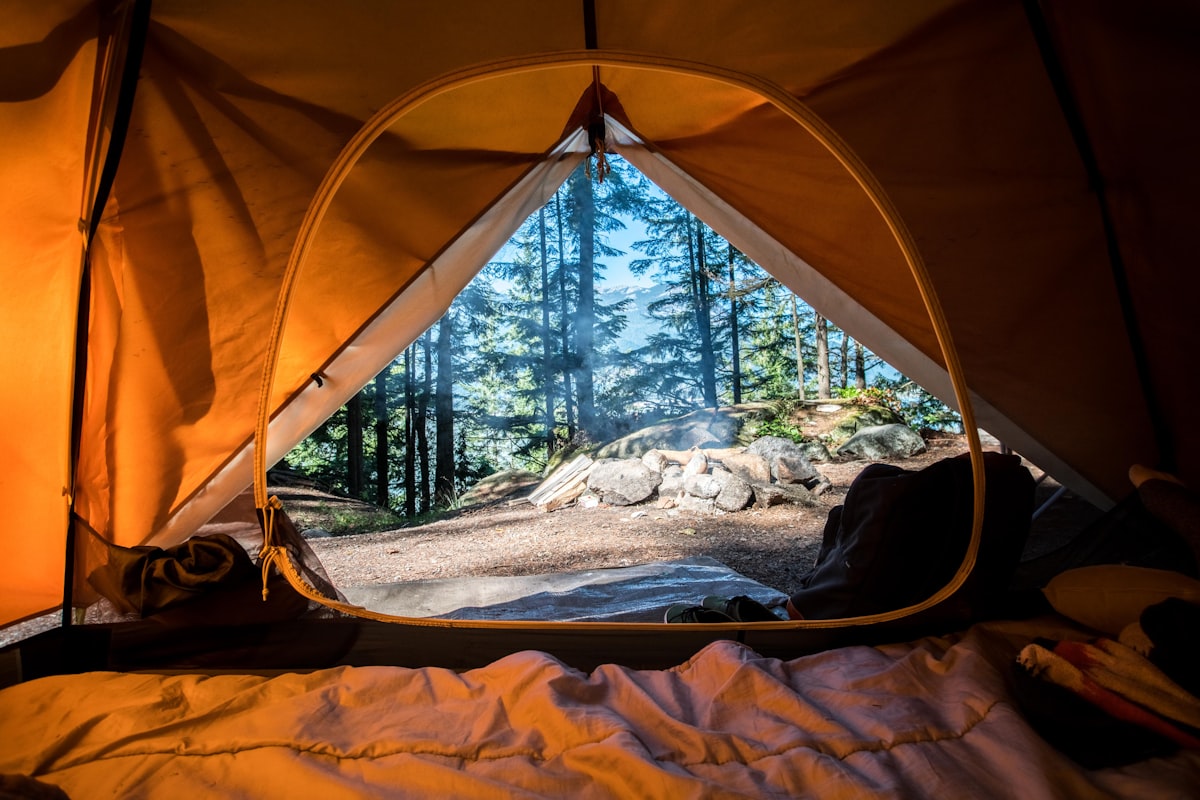
Best 10-Person Tents 2026 (And Whether You Need One)
Picture the second night. The first night, the ten-person tent was magic — everyone stood up inside, changed in privacy, and the kids treated it like an indoor fort. Then the wind came. By 1 a.m. the big flat walls were booming like a sail, a corner had pulled its stake, and someone was outside in a headlamp re-anchoring guylines in the drizzle.
That is the ten-person tent in one scene: spectacular when conditions are kind, demanding when they are not. Here are the models that actually hold up, and an honest look at whether you should buy this much tent at all.
Our 10-person picks at a glance
| Option | Setup | Weather | Best trait | Amazon |
|---|---|---|---|---|
| Coleman WeatherMaster 10 | ~15 min | Strong | Lives like a room | See |
| Ozark Trail 10 Instant | ~2 min | Fair | Space per dollar | See |
| Two Coleman Sundome 6 | ~10 min ea. | Good | Wind resilience | See |
The options in detail
Short on time? Here are our picks at a glance — tap any name to jump to the full analysis.
| Our pick | Award | Key specs | ||
|---|---|---|---|---|
| Coleman WeatherMaster 10 | BEST OVERALL 10-PERSON | Sleeps: 8-10Floor: 17 x 9 ftPeak height: 6 ft 8 in | View price | Read analysis ↓ |
| Ozark Trail 10-Person Instant Cabin | BEST BUDGET 10-PERSON | Sleeps: 10 (7-8 comfy)Floor: 14 x 10 ftPeak height: 6 ft 6 in | View price | Read analysis ↓ |
| Coleman Sundome 6 | THE SMARTER ALTERNATIVE | Sleeps: 5-6Floor: 10 x 9 ftPeak height: 5 ft 8 in | View price | Read analysis ↓ |
Coleman WeatherMaster 10-Person Tent

The rare big tent that treats weather as a design problem, not an afterthought.
Why it stands out The rare big tent built to survive the storm that flattens bargain giants - hinged door, standing room.
Most ten-person tents are fair-weather balloons. The WeatherMaster is the exception people keep coming back to: a hinged door, tall standing room throughout, and a pole set stiff enough to ride out the wind that flattens cheaper giants. You set it up once, leave it a week, and live in it.
The review pattern is telling — owners specifically praise how it holds in storms that wrecked their previous large tents, and the complaints are all about the honest cost of size: it is heavy, bulky packed, and a genuine two-person, fifteen-minute setup.
Pros
- Real standing headroom throughout
- Sturdier poles handle wind
- Hinged door
- Room to sleep 8 plus gear
Cons
- Two-person, ~15-min setup
- Heavy and bulky packed
- Needs a large flat pad
- Priced above budget giants
Best for: Families who stay put for days and want a weatherproof space to actually live in.
Ozark Trail 10-Person Instant Cabin Tent

140 sq ft and an instant frame for the price of a mid-tier six.
Why it stands out 140+ sq ft, a room divider, and an instant frame for the price of a mid-tier six.
If trips are occasional and the budget is real, the value here is hard to argue with: instant hub poles stand it up in a couple of minutes, a divider splits it into two rooms, and you get an enormous floor for the money. Just respect what the price implies about weather and longevity.
Pros
- Huge floor per dollar
- Instant hub-pole setup
- Room divider, two doors
- Cheap to replace
Cons
- Partial rainfly
- Hub poles are the weak point
- Not for frequent hard use
- Bulky packed
Best for: Occasional big-group campers who want maximum space per dollar in mild weather.
Coleman Sundome 6-Person Tent

Two of these often beat one giant — and this is why we recommend the split.
Why it stands out The most-recommended budget 6 - proven welded floor, fast pitch, endlessly available.
Before you commit to a single ten, consider two well-made sixes. They pitch faster, shrug off wind, pack lighter, and let adults and kids sleep in separate rooms. You lose the shared great-room feeling and gain resilience — a trade a lot of families make once and never regret.
Pros
- Two smaller tents pitch fast
- Far better in wind
- Separate rooms for the group
- Cheaper than one premium giant
Cons
- No single shared space
- Two footprints to find
- Two tents to store
- Less "wow" factor
Best for: Families who value calm nights and easy setup over one dramatic shared room.
Side-by-side: the specs that decide it
The numbers make the trade-offs concrete. Here is how the picks stack up on the specs buyers actually compare before they commit.
| Spec | Coleman WeatherMaster 10 | Ozark Trail 10-Person Instant Cabin | Coleman Sundome 6 |
|---|---|---|---|
| Sleeps | 8-10 | 10 (7-8 comfy) | 5-6 |
| Floor | 17 x 9 ft | 14 x 10 ft | 10 x 9 ft |
| Peak height | 6 ft 8 in | 6 ft 6 in | 5 ft 8 in |
| Weight | ~34 lb | ~35 lb | ~16 lb |
| Poles | Fiberglass/steel | Instant hub | Fiberglass |
| Rainfly | Above average | Partial | Partial |
| Typical price | $280-$380 | $150-$220 | $90-$130 |
| Amazon | Check price | Check price | Check price |
What that much space really buys — and costs
A true ten gives a family of four or five something smaller tents cannot: the ability to live in it, not just sleep. Cots instead of ground pads. A dry indoor space when it rains all day. Separate zones if there is a divider. For campers who set up once and stay, that comfort is the whole point.
But space is never free. A ten asks for a large, flat, clear pitch many campsites cannot offer. It packs heavy enough that one person struggles to carry it. Setup is a two-person ritual. And in wind, all those square feet become surface area the weather pushes on. If you relocate often or camp somewhere exposed, a giant cabin turns from asset to burden overnight.
Buying guide
Buy for the storm, not the sunny photo
Shop on pole strength and guyline points, not floor area. The tents that survive are the ones reviewers mention riding out wind — read those reviews first. A cheap giant is fair-weather-only no matter what the box promises.
Confirm your campsite fits it
A 14-by-10 tent needs closer to 18-by-14 of clear, flat ground once the fly and guylines are out. Check campground footprint limits before you arrive.
Cabin tent or dome? The shape changes everything
Ten-person tents come in two silhouettes, and the choice matters more than the capacity number. Cabin-style tents have near-vertical walls and a high, flat ceiling — you get maximum usable floor and true standing room in every corner, at the cost of wind resistance, because those flat walls catch gusts. Dome-style large tents have sloped walls that shed wind far better but steal headroom near the edges, so the honest floor space is smaller than the footprint suggests.
The rule of thumb: if you camp in sheltered campgrounds in summer and want the most livable room, buy the cabin. If you camp anywhere exposed or in shoulder season, the dome's weather stability is worth the lost corners. Trying to get both in one big tent is how you end up disappointed in both directions.
The real cost of ownership
A big tent's price tag is only the beginning. Factor in a footprint or tarp to protect the floor, a mallet for the longer stakes it needs, upgraded stakes if you camp anywhere but soft grass, and the storage reality — a 10-person tent packs into a bag the size of a large duffel that will dominate a closet or garage shelf. None of this is a reason not to buy one; it is a reason to buy the right one once, rather than replacing a bargain giant every couple of seasons after it fails.
There is also the drying problem nobody mentions. A tent this size cannot go back in its bag wet without growing mildew, and it is far too large to drape over a backyard railing. Plan on setting it back up at home — or in a garage — to dry fully after a rainy trip. Owners who skip this step are the ones writing reviews about musty smells and delaminated coatings a year later.
Who genuinely benefits from a 10-person tent
Strip away the marketing and a true ten earns its place for a specific kind of camper: the family that drives to one campground, sets up once, and stays three to seven nights. For them, the living space is transformative — cots, chairs, a dry rainy-day refuge, and room for kids to play. The setup time amortizes across a week, and the bulk is a non-issue because it never leaves the car until the destination.
The camper who should not buy one is the mover: the person who relocates every night or two, camps in exposed or windy terrain, or values a quick, one-person pitch. For them the ten is all downside — slow, heavy, wind-vulnerable — and two smaller tents or a single well-chosen 6-person will make every trip easier.
Pitching a 10-person tent solo (if you must)
Manufacturers imply a one-person pitch; reality is harder but not impossible with the right approach. Choose a tent with pre-attached or hub-style poles if you will ever set up alone. Lay everything out and orient it first. Raise the structure from the center outward, staking two opposite corners early so the tent cannot slide as you work the remaining poles. Keep a second stake pounder and a few spare stakes in your kit — solo setup goes wrong most often when a stake bends and there is nobody to hold tension while you deal with it. Even so, budget extra time and lower your expectations; a genuinely windy day makes solo large-tent setup a two-person job whether you planned it that way or not.
The verdict
A 10-person tent is a specialist tool that a specific camper loves and everyone else finds burdensome. If you drive to one spot and settle in for the better part of a week, the space is genuinely transformative and worth every ounce of setup effort. If you move often, camp in exposed places, or want a fast solo pitch, the same tent becomes a slow, heavy, wind-catching liability, and two smaller tents or a single quality 6-person will serve you far better. Answer the honest question — do you set up once and stay, or do you move? — and the right choice becomes obvious. That single distinction matters more than any spec on the box.
Frequently Asked Questions
Is a 10-person tent overkill for a family of four?
Usually, but not always. If you want walk-around room, cots instead of pads, and a dry common space on rainy days, a ten can be a luxury a family of four genuinely enjoys. If you move campsites often or camp in wind, that much tent becomes a liability quickly.
How long does a 10-person tent take to set up?
Instant hub-pole models pitch in a couple of minutes; traditional large tents are a deliberate 15-to-20-minute, two-person job. There is no honest one-person, one-minute ten-person tent — the ones that claim it are timing a partial pitch.
Do big tents hold up in wind?
Only the well-built ones. Large flat wall panels act like sails, so pole strength and guyline anchoring decide everything. A quality ten rides out a storm; a bargain ten folds. This is the biggest quality divide in the category.
How much clear space do I need to pitch one?
More than the floor dimensions suggest. Add several feet on every side for guylines and the fly, and confirm the ground is flat and clear. Many campgrounds cap tent footprints, so measure your site before arriving with a fourteen-foot tent.
One big tent or two smaller ones?
Two smaller tents win more often than people expect — easier setup, better wind performance, separate sleeping zones. One big tent wins on togetherness and rainy-day common space. Decide which of those two things you actually value most.